Suppressing anger and other unpleasant or challenging emotions can lead to a range of unwanted social, physical, and mental health outcomes. Expressing anger within music therapy can help clients to move through the feeling in a healthy way. The music can act as a container, rhythmic movement soothes the nervous system, the right song can provide validation and catharsis, songwriting can help to precisely articulate and express oneself, and the physical act of playing an instrument can provide relief and help complete the stress cycle.
Sometimes, when I am not able to find the words to adequately describe a feeling, I am able to use music to explore it, be with it, feel it deeply, and move through it. For many clients, this process may not come naturally—and that’s okay. Part of my role as a music therapist is to guide and support clients through this experience in a way that feels safe and accessible.
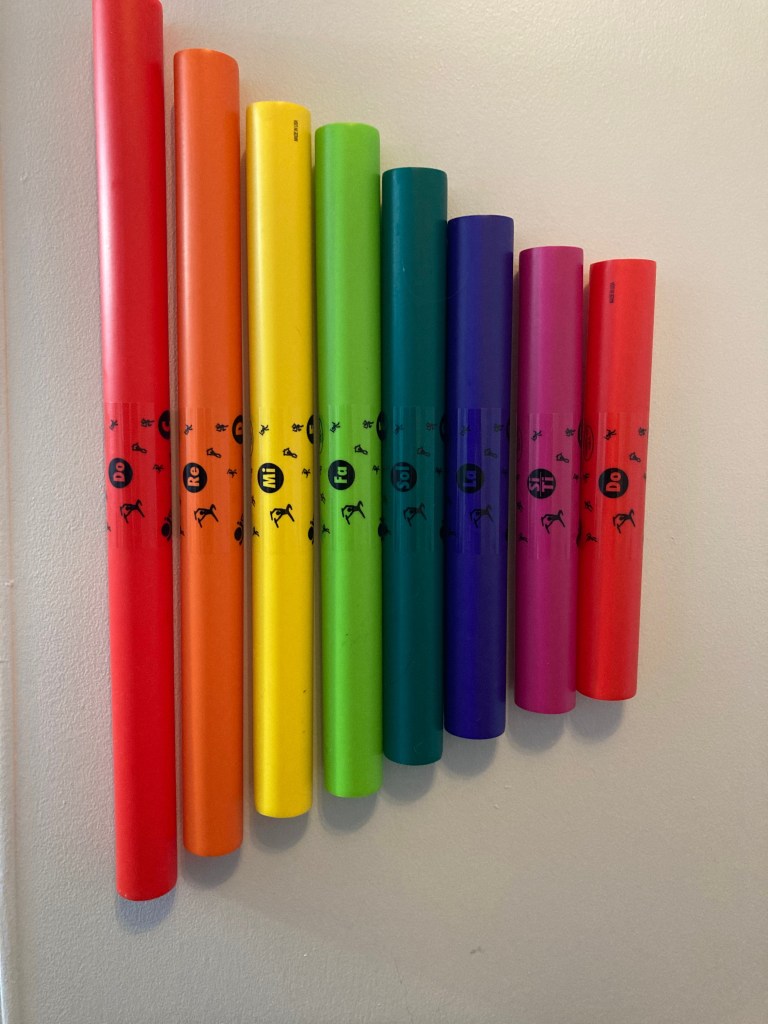
Clients of all ages have expressed appreciation for the boomwhackers (below), which offer a fun and engaging way to engage in rhythmic play —supporting neuroregulation—while also allowing for larger, expressive movements that help release emotion safely and appropriately.
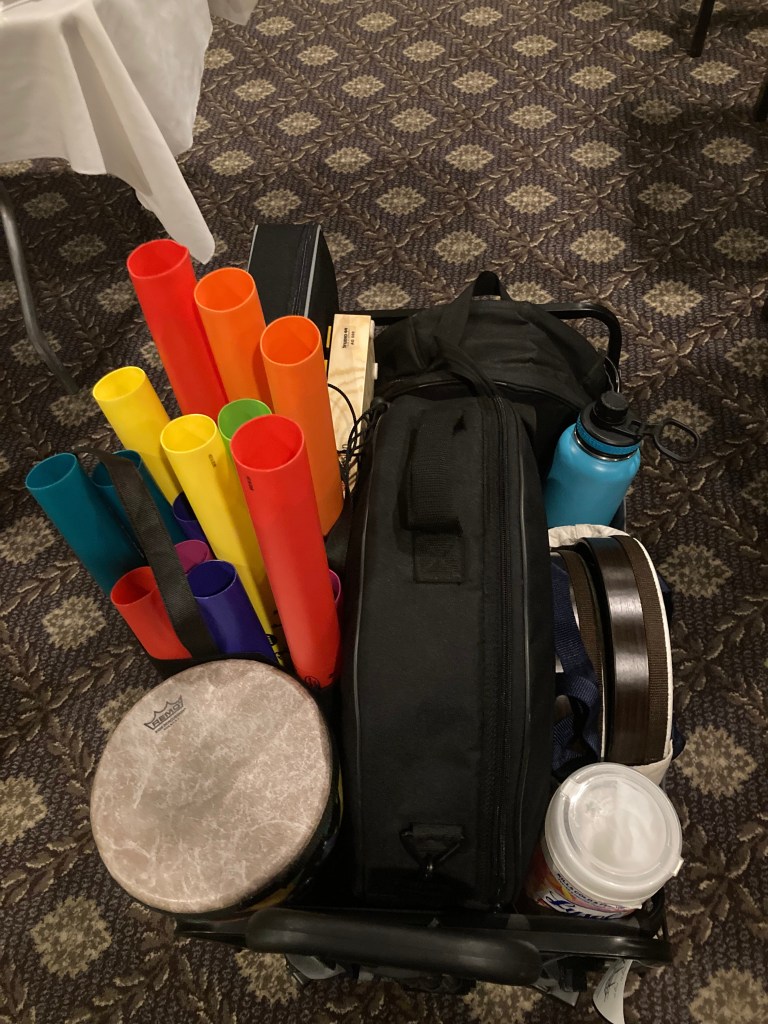
Likewise, clients can benefit from “playing it out” on whatever other instruments are available in the moment. At times, we even create instruments from objects in our environment, reinforcing creativity, agency, and embodied expression.
Music therapists frequently use live music for this reason. Live music allows us to adapt instantly and continuously to changes throughout a session. Rhythm, tempo, harmony, volume, articulation, melody, genre, and instrumentation can all be modified in real time to best support the client.
Songwriting provides an opportunity to integrate verbal self-expression, to practice precision in the choice of words, and to granularly define the feeling and its contributory factors, if desired. Songwriting can add another layer of agency into the session, and can range from improvisational songwriting (the song is created in the moment, and can stay in the moment, as part of a process of self-expression and transmutation), song transformation (an existing song is amended to suit the needs of the client), creating a song completely from scratch (provides the client with a take-home finished project to cherish as long as they see fit!), and many, many more variations.
In music therapy, we often utilize the “iso principle” to shift from one emotional state to another. For example, if a client is in an activated state and we would like to support them in down-regulating, we may introduce music that matches the client’s present state (meeting a need for connection and validation, saying “I hear you!”), and gradually adjust the music to shift the feeling in the desired direction (for example: stimulation or relaxation), always taking care to monitor the client’s response and honor their needs in-the-moment.
Anger is not something to suppress or fear—it is information, energy, and a natural human response that deserves to be acknowledged and expressed authentically and in the best interest of the individual. Music therapy offers a flexible, embodied, and deeply human way to explore anger without judgment, overwhelm, or harm. Through rhythm, movement, live music, and creative expression, clients are supported in listening to what their anger is communicating and allowing it to move through the body in a way that promotes regulation, insight, and healing. With skilled guidance, music becomes not just an outlet, but a pathway toward integration and greater emotional well-being.
 Harmony Within: Music Therapy & More