My first exposure to music therapy was in a day program for individuals with dementia. I had never imagined that I would someday become a music therapist; I thought I would play flute in a world-class symphony orchestra, but once I witnessed the power of music therapy, there was no going back.
During my first semester at Berklee College Music, I spent long hours in the practice rooms rehearsing flute and perfecting my technique. I loved performing, but I started to feel a calling to become a helper and to do something that involved more daily interaction with people. After meeting a music therapist by chance, I was invited to observe a group music therapy session in a day program for older adults with dementia.
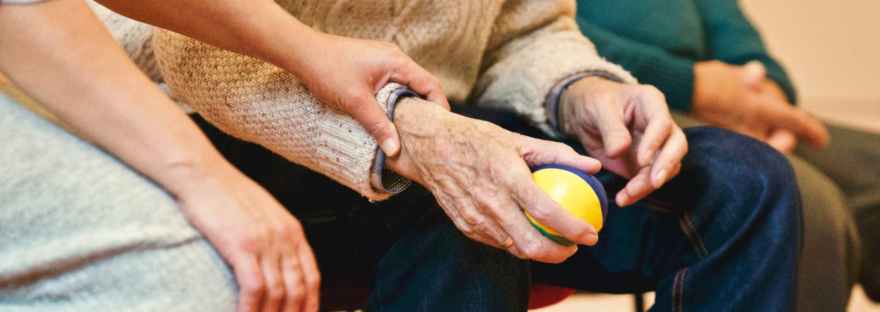
I arrived to the day program during their lunch hour, and I felt heartbroken to see how much support the once vibrant and capable participants needed. They required assistance with feeding, mobility, and all basic activities of daily living (ADLs). Some had lost all ability to verbally communicate or ambulate independently.
The music therapist and day program staff helped the participants over to an area with comfortable seating arranged in a semi-circle, and once everyone was in place, the magic began: people who could no longer walk were dancing, people who could no longer speak were joyfully singing songs of their youth. Bright smiles and laughter lit up dim, previously expressionless faces. In that moment I felt a renewed clarity of purpose and knew my purpose was to find a way to recreate the impact of those moments again.
After the program, I signed up to volunteer with the music therapist who worked full-time in the assisted living in the same building, then I went back to Berklee and applied to the music therapy program.
While volunteering, I observed music therapy groups and individual sessions on both units: one unit with people early in the diagnoses, and one unit with individuals with advanced dementia. My favorite group was the songwriting group, where the music therapist used humor, joy, structure, and acceptance to support residents in confronting the harsh realities of dementia, such as becoming increasingly forgetful and dependent upon others for basic ADLs.
Music makes everything easier. I say it all the time, but it’s true: exercise, eliciting verbal phrases, memory recall, interacting with others in an uplifting and fulfilling manner, confronting difficult and painful emotions . . . the list goes on. There are innumerable ways people with dementia and their care partners can benefit from music therapy.
I believe music has a place as an essential, basic service in every memory care unit. Indeed, there are not enough music therapists to go around: music therapists can also serve as consultants in developing supportive music programs, or train caregivers in the safe integration of music into daily support tasks. (Care must be taken to reduce the risk of harm when providng music interventions).
Music therapy can:
- Improve cognitive function
- Ameliorate depression
- Decrease feelings of isolation
- Decrease agitation & prevent increases in psychotropic medication
- Provide opportunities for reminiscence
- Increase motivation for exercise/movement
Please contact me for more information about the benefits of music therapy for individuals with dementia.
Resources:

 Harmony Within: Music Therapy & More